Home / Blog / Guided tour vs self-drive aurora hunting in Iceland
Guided tour vs self-drive aurora hunting in Iceland
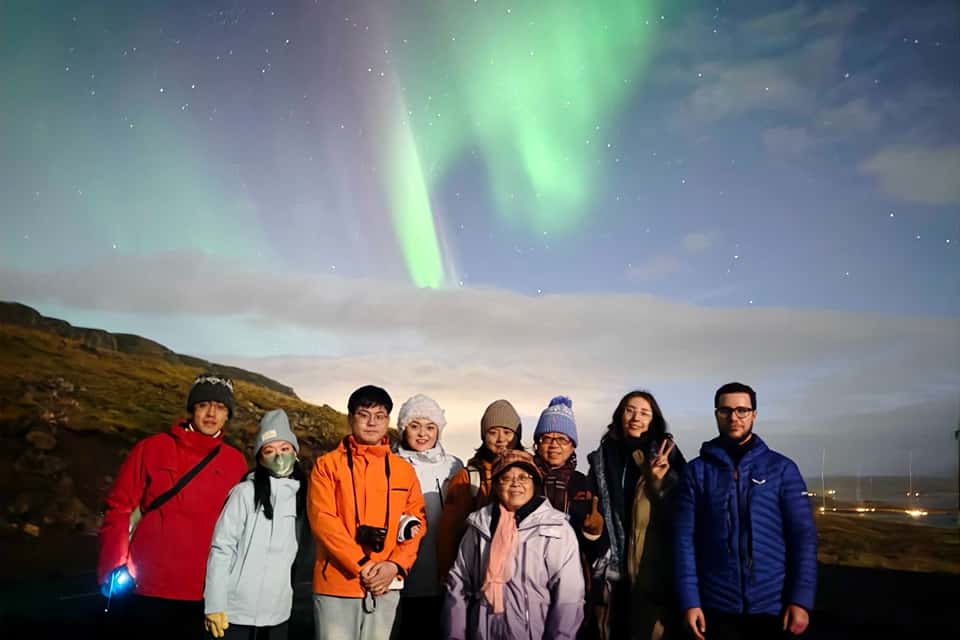
There are two honest ways to go aurora hunting in Iceland: join a guided tour, or drive yourself on open public roads. Both can work. They ask different things of you, and one is not automatically more “authentic” than the other.
This comparison is for people deciding how to spend a winter evening, not for selling a single option. You can browse guided tours from local operators, or read about our self-drive aurora guide. Bookings on this site are not open yet; the difference between the two approaches will still hold when they are.
What a guided tour is for
A guided hunt is a booked evening with a driver-guide who leaves Reykjavík, or meets you there, and goes looking for a darker sky and a break in the cloud. You do not have to read the road in the ice, and you do not have to choose a viewpoint in an unfamiliar landscape at night. The guide is watching the same public forecasts you can watch, and they are used to changing direction after departure.
Tours come in several shapes. A coach is usually the lowest price, with a set departure and a guide on a larger bus. A small-group minibus has fewer seats and can often change the stop more easily if the sky shifts. A Super Jeep is a modified 4×4 for rougher, still legal, tracks. A boat looks at the lights from the water, if the harbour is open. A private tour is your own vehicle and pace, priced per group rather than per seat. The which tour page walks through those choices.
Many listings include hotel pickup in the capital area, a warm vehicle between stops, and a clear cancellation window shown before you pay. Some include photographs, hot drinks or a free retry on another night if the lights do not appear; those extras are listed on the individual tour page and should not be assumed. No tour can guarantee a sighting, because no one can reserve the sky.
A guided evening is usually the better fit if you are not used to winter driving, if you are travelling without a car, if you would rather look at the sky than at the verge, or if you are in Iceland for only a night or two and want someone else to make the weather call.
What self-drive hunting asks of you
Driving yourself gives you the clock. You can leave when the cloud breaks, stay as long as you like, and go back out at 2 a.m. if the sky opens late. You also take on the road, the navigation, the decision to turn around, and the risk of stopping in a poor place because the lights have appeared over a live lane.
In winter that is a real responsibility. Headlights stay on. You drive for ice, not for the posted limit alone. You stay on open public roads and signed parking, never on a closed pass, a highland F-road, a ski track or the open land beside the tarmac. Off-road driving is illegal in Iceland, and people get stuck in snow that looked shallow from the driver’s seat.
Before you leave, check road.is and the cloud and aurora forecasts the same evening. SafeTravel is the public safety service for travel conditions. Tell someone your plan. Go out with a full tank, a charged phone, a power bank, a scraper, warm layers, and a map that works offline. Do not drink and drive. If the road is blowing out, turn back. A missed aurora is cheaper than a rescue.
Self-drive suits visitors who already have a suitable hire car, who are calm on winter roads, and who are willing to treat the hunt as a weather outing, not a scenic detour. If that is you, our self-drive page explains the paid guide we offer, including practical advice for the evening. The detailed pull-offs are part of that guide, not something to improvise from a blog post.
Cost, time and comfort
A seat on a group tour has a clear price on the tours page, shown in Icelandic krónur, and you know what the evening includes. A private tour costs more because you are paying for the vehicle. Self-drive looks cheaper if you already have a car, but you still pay for fuel, time, parking sense and the chance that you pick a cloudy direction. There is also the cost of a mistake on ice.
Time is not only the hours under the sky. A tour has a pickup and a return; you can leave that to the driver. Self-drive adds the time to watch the forecast, leave town, find a safe stop, and get back. Comfort is personal: some people want quiet and their own thermos; others want a guide, a warm bus and someone who will say “we are moving”.
A third option: both
You do not have to choose for the whole trip. Many visitors drive themselves during the day and join a guided hunt at night, especially on a short stay in Reykjavík. That keeps the winter night driving in the hands of someone who does it for a living, and still leaves you free by day. If you have three or four nights, you can try a tour early in the trip and go out yourself later if the sky and the roads invite it.
The forecast method is the same either way. Read how to read the aurora forecast, dress for a still stop as in what to wear and how to photograph the aurora, and give yourself more than one night in the season if you can.
A straightforward way to decide
Choose a guided tour if you want a local operator to handle the route, the pickup and the weather call, or if you have any doubt about a winter night on Icelandic roads. Choose self-drive if you already have the car, the experience and the patience to turn around. If you are unsure, take the tour. The sky will not mind, and the road is a poor place to learn.
When you are ready to compare vehicles and group sizes, start with all tours or which tour is right for me?. If you plan to drive, start with the self-drive guide. We will not invent a sighting for either path. We will help you pick a sensible way to go and look.
See all toursForecast guideSelf-drive guide